
Spinal Tap II: The End Continues is Exhausted, Unfunny and Unnecessary Even By Legacy Sequel Standards
I never thought I'd write these words, but the sequel isn't as good as the original.

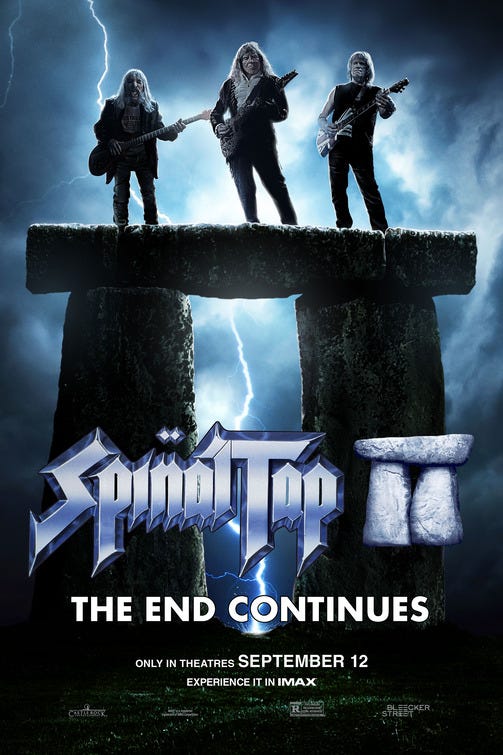
Suffering through Spinal Tap II: The End Continues, one word kept rummaging around my cerebellum: Why? Why did they make a sequel to one of the funniest and most beloved comedies of all time? Why did they make the sequel now, when its stars are exhausted old men who look ready for lengthy naps? Why choose this flimsy of a premise? Why? Why? Why?
When it comes to the perplexing existence of wildly unnecessary follow-ups, such as Spinal Tap II, the answer to "why?" generally involves money and expediency.
I wrote a column called First and Last for TCM Backlot that covered the debut and final films of notable filmmakers. Unsurprisingly, I overwhelmingly discovered that the first film of important auteurs is a hungry young masterpiece that reflects their sensibility in its purest form.
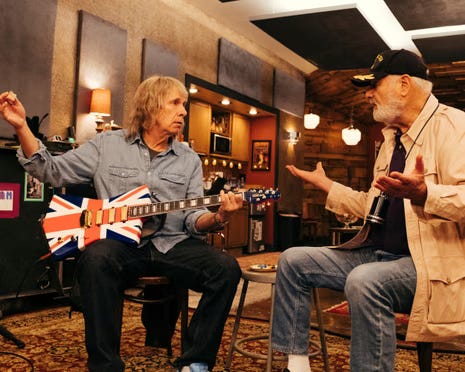
It's the movie they’ve wanted to make their entire lives, a passion project full of energy, ambition, and personality.
If debuts are often the movies directors have wanted to make their entire career, then final movies are often projects that they were able to get financed.
These tired last directorial efforts frequently reek of calculation and desperation.
Debuts are generally born of passion; final films, on the other hand, are often the product of pragmatism.
I hope Rob Reiner lives long enough to make dozens more half-assed, quickly forgotten movies that leave audiences and critics wondering what happened to the guy who made This Is Spinal Tap, Stand By Me, The Princess Bride, Misery, and A Few Good Men early in his career, before things took a turn.
Yet Spinal Tap II feels unmistakably like a final film. This is Spinal Tap and Spinal Tap II feel like bookends for Reiner’s initially extraordinary and then deeply disappointing directorial career.
This is Spinal Tap has the energy, ambition, and personality of a landmark debut. In sharp contrast, Spinal II was made primarily because Reiner could get it financed on an exceedingly modest budget before its stars passed over to the big stadium in the sky.
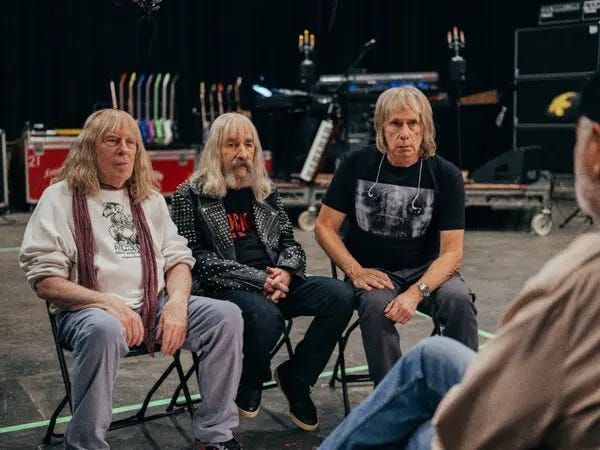
Given the arbitrary nature of this mercenary endeavor, it seems appropriate that its thin excuse for a plot revolves around a contractual obligation.
Spinal Tap II’s paltry premise involves Hope (Kerry Godliman), the daughter of original Spinal Tap manager Ian Faith (Tony Hendra), inheriting her father’s contract with the band. It stipulates that the band must reunite to perform one last concert.
Documentarian Martin "Marty" DiBergi (Reiner) returns to chronicle the reunion, preparations, and final concert of a trio whose popularity received a boost when Garth Brooks and Trisha Yearwood covered one of their songs in concert.
As we Chris Gaines fans can attest, everything even vaguely connected to Brooks is successful, so the group’s cold-hearted management arranges for the band to do a reunion show in a New Orleans stadium, on a night vacated by Stormy Daniels.
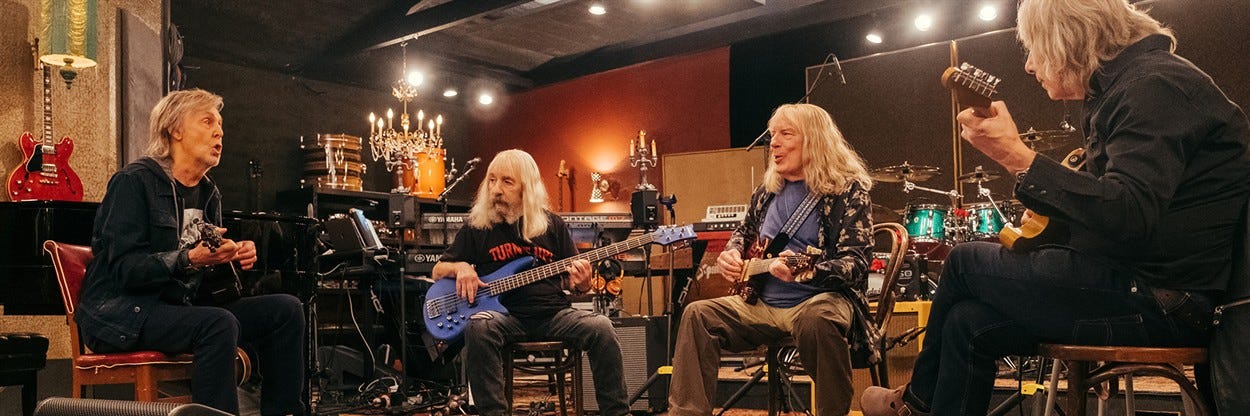
That's one of several gags that are almost amusing. Spinal Tap II seems content to aim for mild amusement rather than explosive laughter. It’s a profoundly sleepy endeavor cursed by a lack of urgency. It’s a rock movie for the AARP set that seems primarily concerned with conserving its minimal energy.
In New Orleans, where bland movies venture for an explosion of local color, guitarist Nigel Tufnell (Christopher Guest) and singer David St. Hubbins (Michael McKean) resume a relationship overflowing with tension and competition while bassist Derek Smalls (Harry Shearer) just lingers on the periphery, taking up space.
Because all of their other drummers died mysterious deaths, they hold auditions for a replacement.
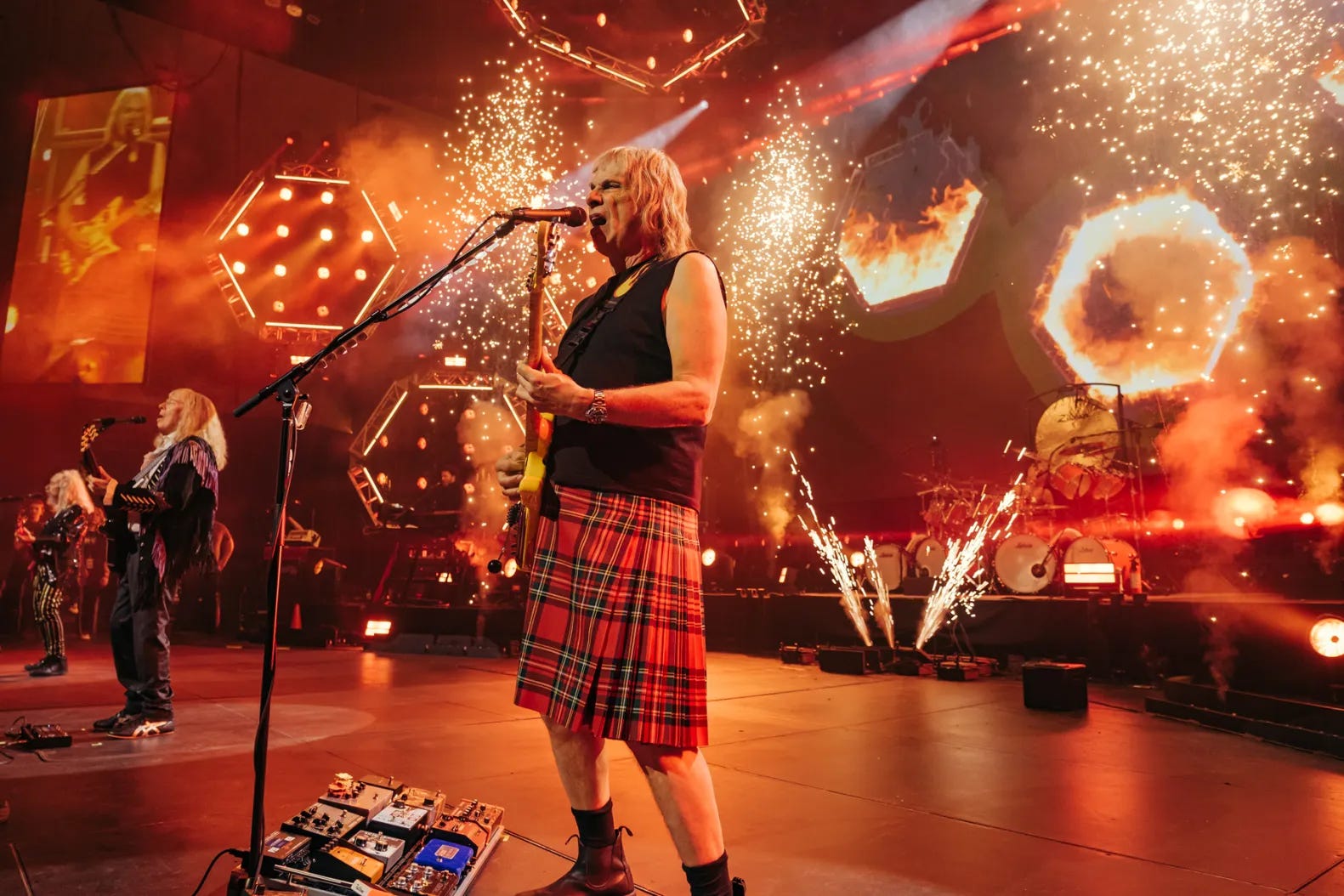
They choose Didi Crockett (Valerie Franco). Franco steals the film with her punk rock charisma and androgynous, tattooed sexuality.
Franco is an explosion of youthful energy and excitement in what is otherwise a profoundly sleepy affair. The new drummer, who is young enough to be the granddaughter of Spinal Tap’s core members, is overjoyed to be performing with legends. She’s the only person onscreen who seems to be having fun.
Franco doesn’t need jokes or dialogue or character development to make an indelible impression. That’s good, because the movie doesn't give her jokes, dialogue, or characterization. It does give her an equally hot girlfriend, which only makes her more attractive to the old men at the film's center.
In New Orleans, Spinal Tap is visited by rock royalty when Paul McCartney and superfan Elton John stop by.
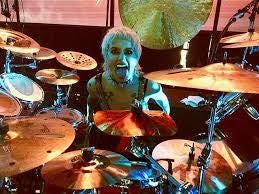
Reiner is understandably grateful for extended cameos from two of the most famous people alive. When you’re as legendary as McCartney and John, you don’t need to be funny to justify your role in a too-late trifle like this. That’s both fortunate and unfortunate because neither the former Beatle nor Bernie Taupin’s former songwriting partner is given anything even remotely amusing to do. They’re here because they’re Paul McCartney and Elton John, not funny performers.
McCartney somehow looks boyish into his eighties, but it feels like every second they filmed made it into a movie that can use all the help it can get.
Spinal Tap II peaks with a climactic concert performance that trades on cheap nostalgia and the audience’s love of the characters, their songs, and the world these gifted improvisers created when they were hungry young men, not weary codgers.
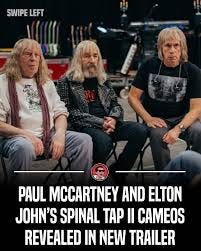
Spinal Tap was a fake band that proved so popular and beloved that it became a real band, complete with tours, albums, and appearances on television shows like The Simpsons.
Spinal Tap II turns Nigel, David, and Derek back into cinematic protagonists, but the magic is gone. That’s true of other deeply misguided comedy legacy sequels, such as Zoolander 2, Super Troopers 2, and Dumb and Dumber To.
Spinal Tap II is nowhere near as egregiously awful as those abominations. It’s not terrible so much as it’s groaningly unnecessary and instantly forgettable.
It's never a positive development when you can point to the one funny line in a comedy. That is particularly true if the movie in question is a sequel to a comedy generally considered one of the funniest and most important of all time.
So it is not a good thing that I can single out the one bit of dialogue here that made me genuinely chuckle, rather than merely bringing me to the verge of laughter.
It occurs late in the film, when a character worries that he's about to die and desperately begs that his browser history be deleted.
It’s a funny line in an unfunny movie.
Forty-one years later, This Is Spinal Tap remains unforgettable, whereas I have already mostly forgotten the sequel, even though I saw it less than twenty-four hours ago.
two stars out of five
That’s so disappointing to hear, because I was hoping that it’s satirical angle would make this the one “legacy” sequel that could justify its existence. With so many real-world geriatric rock acts still touring and milking every opportunity to sell out and trade in nostalgia from their aging fans, there’s a lot of material that could be cleverly satirized. Washed-up has been a desperate to still seem relevant sounds like a perfect place to re-meet these characters.
But I guess there’s a fine line between clever and stupid.
I don't remember where I read it, but all the Spinal Tap stunts over the years, including recording a DVD commentary in character, were done for the same reason Warren Beatty did that recentish appearance as Dick Tracy - to hold onto the rights. So whenever the rights are going to lapse through non-use, they pop up and do a commercial or a new commentary or a concert or whatever. And it wouldn't surprise me at all if this movie was a result of that as well.